Literally Fine, Cat with Christmas Lights Review
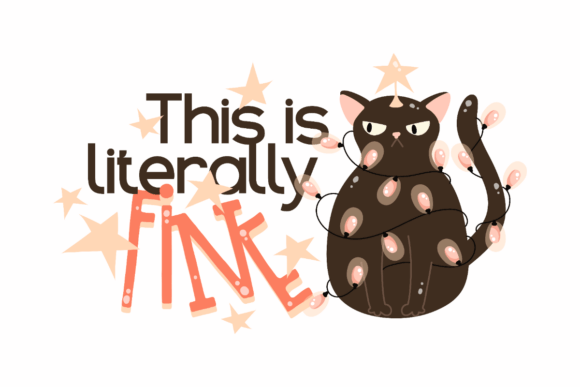
As someone who has spent years turning digital files into tangible handmade products for clients and my own shop, I know that the difference between a good embroidery project and a frustrating one often comes down to the design itself. When I first laid eyes on Literally Fine, Cat with Christmas Lights, I didn't just see a cute holiday graphic; I saw a specific mood, a specific challenge, and a specific opportunity for a craft business owner or hobbyist. This isn't just another generic cat image; it is a piece of storytelling that captures that universal feeling of holiday chaos wrapped up in a sarcastic package.
The concept is immediate: a very annoyed cat tangled in Christmas lights with the text "This is literally FINE." It screams relatability. For anyone running an Etsy shop or a small boutique brand, designs that evoke a strong emotional reaction are gold. But as a designer, my job isn't just to admire the artwork; it's to evaluate how well it translates from a screen to fabric. Does the layout hold up under tension? Will the details get lost in the stitching? And most importantly, does it fit the practical needs of the end user?
First Impressions and Visual Personality
The visual personality of Literally Fine, Cat with Christmas Lights is its strongest asset. The composition suggests a chaotic scene that needs to be tamed by the precision of machine embroidery. The layout likely balances the organic curves of the cat and the tangled wires against the structured nature of the text. In my experience, designs with mixed elements like this require careful attention to stitch density and placement. The sarcasm in the quote implies a bold font choice, which usually works well in satin stitch, but the "tangled" aspect of the lights might introduce complex fill stitches that could trap thread if not digitized correctly.
This design feels perfect for holiday-themed merchandise where humor is the selling point. It moves beyond simple seasonal greetings into the realm of personality-driven goods. Whether you are creating custom apparel for a family gathering or designing a line of gifts for your customers, this file offers a narrative hook that standard ornaments or trees simply cannot match. It fits naturally into the Crafts category as a high-value Graphics asset because it bridges the gap between a simple illustration and a statement piece.
Real-World Application: From Screen to Stitch
Let me walk you through a scenario I recently considered while planning a holiday collection. Imagine you are preparing a custom embroidered tote bag for a local craft fair. You want something that stands out on the rack without looking like every other generic "Santa" or "Snowman" item. Literally Fine, Cat with Christmas Lights would be an ideal candidate here. The size of the design allows it to sit prominently on the front of a canvas tote, acting as a conversation starter for shoppers.
However, when I think about applying this to a sweatshirt or a baby onesie, the dynamics change. On a thick fleece sweatshirt, the texture of the fabric interacts differently with the stitch density than it does on smooth cotton. If the design includes fine lines representing the thin Christmas light wires, there is a risk they could disappear into the pile of the fleece unless the digitizer used a lighter touch or a specific running stitch technique. Conversely, on a tight-knit baby garment, the stability of the design is paramount. You wouldn't want a heavy satin stitch area causing the fabric to pucker around a newborn's neck.
I also envision this design working exceptionally well as an embroidered patch for denim jackets or aprons. The "annoyed cat" theme pairs perfectly with the rugged look of workwear or kitchen aprons, adding a touch of wit to a professional-looking tool. For a commercial embroidery project, this file could drive sales for personalized gifts, where the buyer sees themselves in the frustration of the holiday season and wants to wear their relief.
Where to Use (and Where to Pause)
While the design is versatile, a seasoned designer knows that not every surface is suitable for every file. There are specific constraints you must consider before hitting the start button on your machine. If you plan to use Literally Fine, Cat with Christmas Lights on a curved surface like a baseball cap, you need to ensure the digitizing accounts for the curvature. A flat design placed on a crown can distort the text, making the word "FINE" look stretched or squashed, which undermines the sarcastic tone.
Thin fabrics and stretchy knits present another hurdle. If the design features dense areas of fill stitch, it may cause the fabric to warp, especially if the stabilizer chosen is not robust enough to counteract the pull of the threads. For delicate materials like silk or lightweight jersey, this design might be too heavy-handed. Similarly, dark fabrics require a careful selection of thread colors. If the original design relies on subtle contrast between the cat fur and the background, a dark shirt might necessitate an underlay or a specific thread palette to maintain visibility.
You should also be cautious with very small hoop sizes. If the design includes intricate details in the cat's expression or the individual strands of the lights, shrinking the design to fit a 4x4 inch hoop could result in a muddy mess where details merge together. Always inspect the small details in your software before committing to a final production run.
Impact on Product Value and Brand Trust
In the world of handmade products and Etsy sellers, the quality of the embroidery directly impacts customer trust. A design like Literally Fine, Cat with Christmas Lights has the potential to elevate a product from a commodity to a premium item, but only if executed well. When a customer receives a finished product where the text is crisp, the cat looks expressive, and the lights have a nice sheen, they perceive higher value. They feel confident that the maker cares about the details.
On the flip side, if the stitch density is too high and the fabric bubbles, or if the thread colors bleed into each other, the humor falls flat. The design becomes a liability rather than an asset. Proper preparation, including testing on scrap fabric and checking the design assets in black and white mockups, ensures that the final product meets professional standards. This attention to detail builds brand consistency and encourages repeat buyers who know they can rely on your shop for high-quality, fun, and well-made items.
Practical Designer Notes for Execution
Before you download and stitch, here is a checklist based on real-world usage:
- Test First: Always run a test stitch on scrap fabric that matches your final material. Check for puckering, thread breaks, and color accuracy.
- Stabilizer Strategy: Depending on the fabric weight, choose a cut-away or tear-away stabilizer that provides enough support without being bulky.
- Hoop Size Verification: Confirm that your hoop size accommodates the entire design without cutting off edges, especially if you are adding a border or trim.
- Licensing Check: Ensure you understand the terms for commercial embroidery. Some files allow you to sell finished items, while others restrict the number of units or require a separate license for digital resale.
- Thread Contrast: Test your thread choices against the fabric. Sometimes a color that looks great on a monitor looks dull in person due to lighting and fabric texture.
- Detail Inspection: Zoom in on the digitized file to check for tiny, isolated stitches that might break during the embroidery process.
Ultimately, Literally Fine, Cat with Christmas Lights is more than just a graphic; it is a tool for creative entrepreneurs to express humor and connect with their audience. By approaching it with a critical eye and a focus on technical execution, you can turn a simple digital file into a standout handmade product that brings smiles—and maybe a few laughs—to everyone who wears or uses it.